5 Key Drivers of Enterprise A2P Messaging Growth
- May 3, 2026
- 5 Mins Read
- Listen
Application-to-Person (A2P) messaging has become one of the most reliable channels for enterprises to reach their customers directly. From OTP messages and transaction alerts to promotional offers and appointment reminders, businesses across travel and tourism, BFSI, retail, healthcare, and telecom rely on bulk SMS to stay connected with their audience instantly, without needing an app download or internet connection.
As the volume of enterprise to consumer communication grows, so does the importance of understanding why A2P SMS continues to outperform other channels. Below, we break down the five key drivers behind this growth, along with the market dynamics and challenges shaping the industry.
What Is Enterprise A2P Messaging?
A2P (Application-to-Person) messaging refers to text messages sent from a business application, through an SMS gateway or SMS aggregator, directly to a customer’s mobile device. Unlike P2P (person to person) messaging, A2P is built for scale, automation, and business use cases like alerts, marketing campaigns, and authentication.
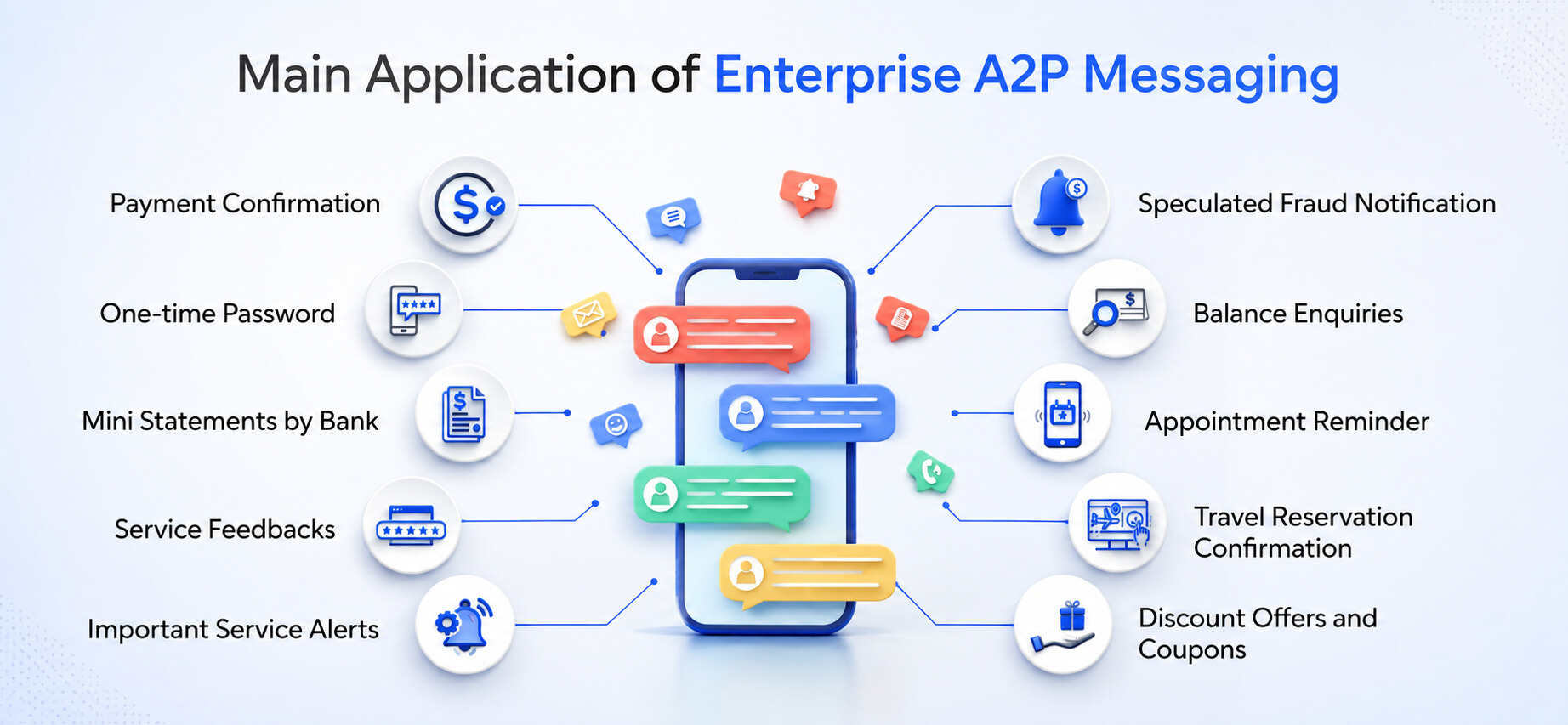
Globally, the Asia Pacific remains one of the world’s most significant regions for A2P SMS adoption, supported by high mobile penetration and strong enterprise demand across banking, e-commerce and telecommunications.
5 Key Drivers Fueling Enterprise A2P Messaging Growth
1. Better Reach Than Email
SMS consistently outperforms email on engagement metrics. Text messages have an open rate of roughly 98%, compared to email’s much lower average, and SMS response rates hover around 20% versus just 6% for email. With inboxes crowded and spam filters growing stricter, SMS remains one of the few channels that reliably reaches the customer, making it the preferred medium for time sensitive, short form business communication.
2. A Cost-Effective Marketing Channel
Budget efficiency is a top priority in any marketing strategy. Compared to traditional channels like print, television, and even many digital ad formats, SMS marketing delivers a strong return on investment. With the right SMS platform, enterprises can run multilingual campaigns at scale without the production costs associated with other media, making A2P messaging especially attractive for cost conscious growth teams.
3. Rising Smartphone Penetration
Smartphone adoption continues to climb as devices become more affordable and consumer purchasing power increases; global smartphone users now number in the billions. While A2P SMS doesn’t depend on smartphones (it works on basic feature phones too), smartphone penetration enhances the channel further by enabling two way conversational messaging, click to action links, and faster purchase decisions, features increasingly associated with RCS messaging and richer forms of business texting.
4. A Trusted, Reliable Method of Communication
While P2P messaging volumes have declined with the rise of OTT apps, enterprise A2P messaging keeps growing. When banks, insurers, or government bodies need to reach customers, SMS remains the default. It doesn’t rely on internet connectivity, which means enterprises can count on high SMS delivery reliability even in low connectivity regions, a critical factor for time sensitive transactional SMS like OTPs and payment confirmations.
5. The Preferred Channel for Financial and Government Communication
Banks, insurance companies, and government bodies consistently favor A2P SMS over OTT messaging for critical use cases: transaction alerts, two-factor authentication codes, and appointment or payment reminders. Branded short codes help these senders build recognition and trust, distinguishing legitimate messages from spam. Broadcasting similar volumes over an OTT channel, by contrast, typically requires a separate business messaging integration, adding friction that SMS avoids entirely.
Challenges and Opportunities for A2P SMS Players
The A2P messaging ecosystem isn’t without its challenges. The rise of OTT messaging apps has diversified how consumers communicate, and mobile network operators continue to lose meaningful revenue to unauthorized grey routes that bypass legitimate SMS termination paths. Despite this, enterprise messaging retains a strong foothold, and the opportunity for SMS aggregators, MVNOs, MNOs, and service providers to monetize this channel remains significant.
Looking ahead, richer messaging formats like RCS and broader CPaaS (Communications Platform as a Service) adoption will expand what’s possible for customer engagement. But A2P SMS is expected to remain a core channel, thanks to its unmatched reliability and reach. For SMS players, success will depend on choosing the right strategy, targeting the right markets, and, critically, partnering with a reliable SMS gateway provider that can guarantee delivery, security, and scale.
If you’re evaluating providers, our guide on choosing the right SMS gateway for your business breaks down the technical and commercial factors enterprises should weigh before committing to a platform.
Conclusion
Enterprise A2P messaging has earned its place as a core communication channel, not because it is new, but because it consistently delivers where it matters most: reach, cost efficiency, and reliability. Better open rates than email, lower campaign costs than traditional advertising, rising smartphone adoption, and unmatched trust from banks and government bodies all point to the same conclusion: SMS is not being replaced, it is evolving alongside newer formats like RCS and CPaaS.
For enterprises, the takeaway is simple. A2P SMS should remain a foundational part of the customer communication stack, even as richer messaging options expand what is possible. For SMS aggregators, MNOs, and service providers, the opportunity lies in solving the grey route problem, improving delivery transparency, and helping enterprises adopt these newer formats without losing the reliability that made SMS indispensable in the first place. Choosing a dependable SMS gateway partner will continue to be the deciding factor between businesses that scale their messaging strategy successfully and those that don’t.
Frequently Asked Questions