PBX vs VoIP: Key Differences & Which Phone System Is Better
- May 16, 2026
- 11 Mins Read
- Listen
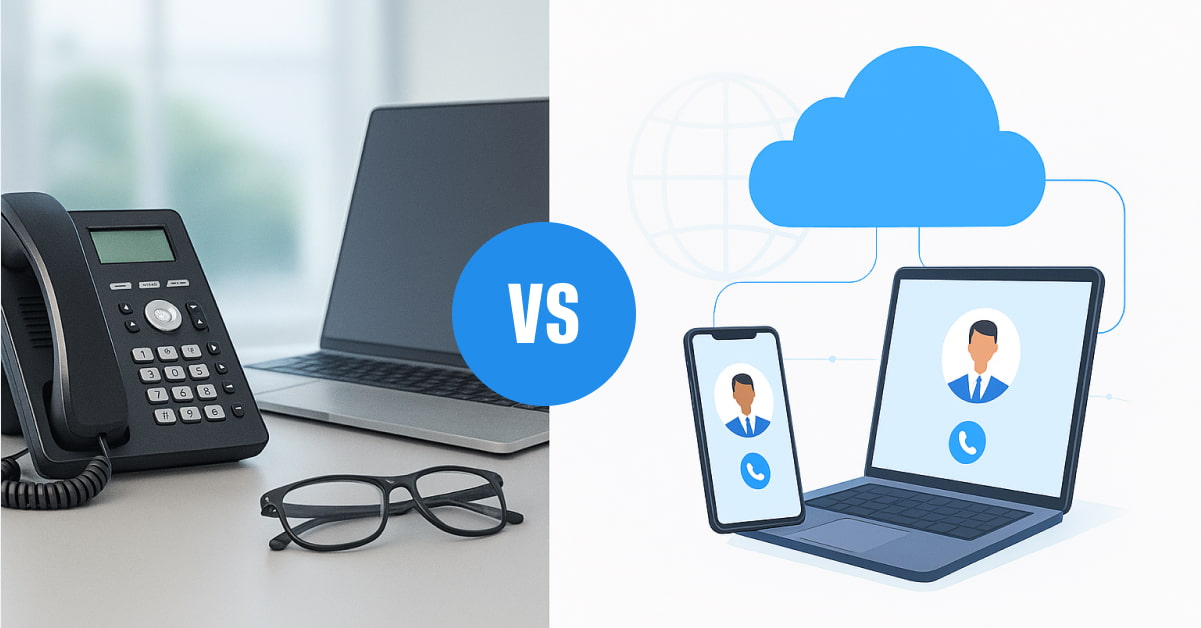
Phone systems set the communication foundation of any business. The types of phone systems a business uses make or break their productivity levels and define their overall success as well. For decades, traditional PBX (Private Branch Exchange) was the backbone of enterprise telephony. However, with digital transformation reshaping every industry, VoIP (Voice over Internet Protocol) has ushered in a new era of flexibility, scalability, and cost efficiency. Let’s compare PBX vs VoIP to understand how hardware-driven setups have transitioned to modern, cloud-enabled communication systems.
We’ll break down the differences break down the differences, advantages, and trade-offs between PBX and VoIP. By the end, you’ll be equipped to make a confident decision about which solution best supports your business goals – not just for today, but for the future of work.
What are PBX and VoIP?
First things first. Let’s clear up a common confusion: PBX and VoIP aren’t the same thing. Many assume they’re identical, but they represent two fundamentally different technologies.

Understanding PBX Systems
A traditional PBX system, or a Private Branch Exchange System, is a private internal telephone system used to manage incoming and outgoing calls, internal extensions, and call routing by companies and organizations. You can consider it as a ‘mini phone company’ dedicated to managing calls within a company’s network. With a PBX, there’s no need for every employee to have a direct line to the public telephone network. Rather, the PBX acts as the central hub that connects multiple phone lines within the organization and routes calls efficiently.
Traditional PBX or Analog PBX Systems were hardware-based, consisting of a central switchboard, telephones, and connecting wires. These systems were installed within the company’s or organization’s premises and required maintenance from the IT staff. These systems use traditional landline copper wires to make connections. These wires enter a business’s premises and connect to a central PBX box containing telephony switches. These switches are responsible for distributing calls to various phones within the business’s office.
Understanding VoIP Systems

VoIP stands for Voice over Internet Protocol, another popular phone system technology. It works by converting analog signals to digital data and transmitting that data over the internet, which is then sent to the target phone.
Let me provide an example to help you better understand.
We are all familiar with and use classic landline phones. Such a phone uses a physical wire that connects it to the phone company’s network and thus allows users to make and receive phone calls. Now imagine that all these calls are being made using your internet connection instead. This means no physical wires or lines. Voice Over Internet Protocol converts your voice or audio into digital data packets, similar to those of an email or when browsing a website. These digital data packets travel across the internet and reach the destination, i.e., the recipient’s phone, where they are converted back into voice.
Key Differences Between PBX and VoIP
Over 90% of businesses rely on their phone systems as their main communication tool. More than half use phone calls to make sales, while 43.6% prefer phone calls to provide customer service. These facts further emphasize the importance of understanding and choosing the right telephone technology for any business.
Let’s contrast traditional PBX and VoIP to highlight their core differences to help you understand which telephony technology aligns with your business needs.
1. Setup and Maintenance Cost
Cost is a significant factor to consider when installing PBX vs VoIP. Traditional PBX systems require a substantial upfront investment for hardware like routers, servers, and gateways. Apart from the cost of phone lines, power supply, and installation, infrastructure setup costs are also there.
Whereas in the case of VoIP, the upfront cost is only in the form of a nominal monthly subscription. This monthly charge is usually dependent on the plan you choose. The user company only needs a stable internet connection and phones (VoIP phones or software).
In terms of maintenance, which is an ongoing cost, PBX systems require dedicated IT staff because of their complexity. On the other hand, VoIP is typically managed by a third-party service provider, reducing the IT burden for your company.
2. Scalability
Often, businesses ignore the importance of considering the scalability factor, i.e., growing their business.
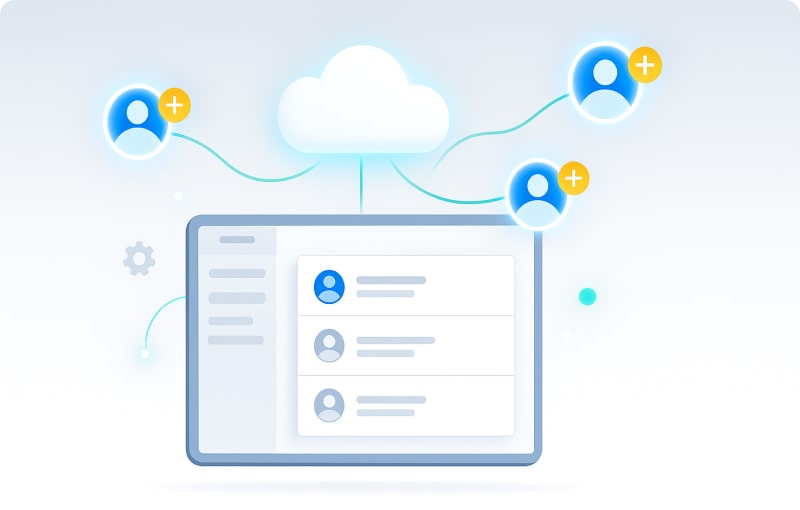
Scaling or expanding a PBX system is usually accompanied by the purchase of new hardware to install new phone lines. This process can be quite time-consuming and expensive, especially when you are shifting your office to a new location. This will mean that you have to build and install the whole PBX system from the very beginning, and you need a new module to add extra phone lines.
However, with VoIP, all this trouble gets eliminated because it scales easily by adding users or features to your existing plan. You’ll only need to get some more IP phones and maybe increase your internet bandwidth as well.
VoIP again shines in terms of scalability.
3. Features and Functionality

Both PBX and VoIP offer standard calling features; however, VoIP boasts a wider range of advanced features. Many VoIP plans usually include video conferencing, instant messaging, CRM integration, and detailed call analytics. VoIP also offers apps that boost remote work flexibility.
PBX again lags in terms of features and functionalities. Since PBX systems are location-dependent, they do not support remote work. Also, when it comes to mobile integration, PBX systems typically require special mobile apps.
4. Security and Reliability
This is another important area of concern as we are comparing PBX vs. VoIP.
PBX systems are based on on-site hardware, such as a traditional PSTN, and not an internet connection. This adds to their reliability and security, as there is no risk of internet-based threats. However, PBX systems may become unreliable in the following situations:
- Power outages
- Physical intrusion
- Hardware failure
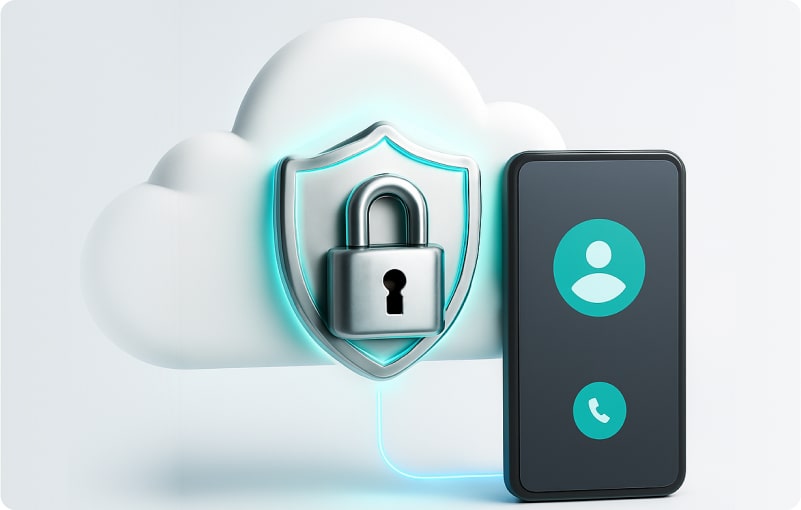
On the other hand, VoIP systems are susceptible to cyber threats and attacks. This makes VoIP security a topic of concern for businesses around the world
However, VoIP providers often follow the latest and most robust VoIP security techniques, including:
- End-to-End Encryption
- Real-time Network Monitoring
- 2 Factor Authentication
- Firewall Protection
Besides all of the above, VoIP providers employ third-party security and compliance certifications like GDPR, HIPAA, PCI, SOC 2 Type 2, etc. VoIP systems come with built-in redundancy and disaster recovery features, while with PBX systems, this can be complex.
5. Call Quality
In its early days, VoIP calls suffered poor call quality, which is why PBX remains a preferred choice for many businesses. But nowadays, the scenario has changed. VoIP offers HD audio and video, which makes it way better than traditional phones.
While PBX systems are established to provide good call quality, they come with a downside, i.e., dependency on hardware infrastructure. Any issue that may arise in the hardware setup can affect the quality of the calls.
On the other hand, VoIP is reliant on internet technology, which, again, if not stable, can cause drops in the call. However, VoIP providers these days maintain a backup power supply and sufficient internet bandwidth so that no glitches happen.
What are the Pros and Cons of Traditional PBX?
For decades, businesses have relied on traditional PBX systems to manage internal and external communication. While many businesses still use PBX, it comes with its own advantages and limitations.
Pros of Traditional PBX:
- Since PBX doesn’t depend on the internet, it works even with poor internet connectivity
- PBX systems operate within your private network, reducing exposure to online threats.
- Traditional PBX uses dedicated phone lines, which means call quality is generally stable and unaffected by internet fluctuations.
- PBX is hosted on-premise, giving businesses complete ownership of hardware, configuration, and upgrades.
Cons of Traditional PBX:
- Installation includes costs like PBX servers, IP/analog phones, annual maintenance contracts, and on-site technicians.
- Adding new lines or extensions requires physical hardware expansion, making scaling slow and costly.
- Traditional PBX often lacks advanced features such as mobile softphones, video calling, CRM integrations, and remote agent support
- Because it’s tied to office hardware, PBX cannot easily support remote staff without complex VPN setups.
- As technology evolves, vendors are phasing out PSTN support, which affects long-term viability.
What are the Pros and Cons of VoIP Systems?
VoIP phone systems use the internet to handle calls. They provide unified communication features like voice, video, messaging, mobile apps, IVR, and CRM integration. VoIP has become the modern standard for cloud telephony.
Pros of VoIP Systems:
- VoIP eliminates the need for expensive PBX hardware. You only pay for internet bandwidth, cloud subscription, and IP phones.
- Adding or removing users is as simple as adjusting your subscription; no hardware changes are needed.
- Employees can make/receive business calls from anywhere using mobile apps, softphones, and Web dialers.
- VoIP systems include advanced communication tools such as call analytics, multi-level IVR, call recording, video conferencing, call monitoring, CRM/Helpdesk integration, auto attendants, and voicemail-to-email.
- VoIP combines multiple communication features such as voice, video, chat, team messaging, and conferencing into one platform, simplifying workflows.
- VoIP supports quick deployment as most cloud VoIP systems can be set up in hours without IT complexity.
Cons of VoIP Systems
- Call quality depends on bandwidth. Slow or congested internet can cause jitter, packet loss, voice delays, and dropped calls.
- Being internet-based, VoIP requires strong security practices such as TLS/SRTP encryption, firewalls, SBCs, secure device provisioning, and multi-factor authentication.
- Without backup power or 4G/5G failover, VoIP phones stop working during power failures.
- Older analog devices (fax machines, legacy phones) may require adapters or may not work optimally with VoIP.
Choosing Between PBX vs. VoIP: Top 3 Considerations
This is where many businesses get confused. PBX and VoIP aren’t always “either/or” options; they’re closely connected. The decision really depends on what you’re trying to achieve:
What’s your Business Size, Type, and Budget?
For big companies that have sufficient resources and dedicated IT staff, PBX can be a good option. With PBX, they will be able to get high-class call quality. But if you are looking for an affordable, flexible, and efficient solution that doesn’t burn a hole in your pocket, then VoIP is for you.
If your business follows the remote working model, then you must choose VoIP because of its flexibility.
What All Features Do You Need?
Suppose you are a small business with just a few employees and require basic calling features, then PBX sounds like a good option for you. However, you must keep the growth factor in mind, i.e., as your business expands, you will need more phone lines and advanced calling features. With a traditional PBX setup, upgrading could mean a heavy investment.
On the other hand, VoIP gives you the flexibility to start with a basic plan if your requirements are simple. And you can always upgrade later without investing too much or wasting any resources.
So choose your option wisely.
What About Your IT Expertise?
Companies with teams of technically skilled personnel can think about the installation and setup of PBX systems. However, if you are a business with limited resources, then it is best to go with VoIP.
It may be a good idea to take some time and analyze the availability of your resources, make estimations about your budget, and think about your actual requirements.
Which One is Better, PBX or VoIP?

Choosing between PBX and VoIP isn’t about picking a winner—it’s about what fits your business needs. Both have advantages:
- Traditional PBX is reliable and stable, ideal for offices with existing hardware and limited internet.
- VoIP is flexible, cost-efficient, and perfect for remote or growing teams.
But today, most businesses prefer a middle path: Cloud PBX, a cloud-hosted PBX system powered by VoIP.
When PBX Is Better
Choose PBX if you need:
- Full on-premise control
- Strong call quality with no internet dependency
- A system that fits your existing telephony setup
When VoIP Is Better
Choose VoIP if you want:
- Lower calling and infrastructure costs
- Remote/hybrid workforce support
- Smart features like IVR, call analytics, and integrations
Cloud PBX: The Best of Both Worlds
Cloud PBX combines PBX-style call management with VoIP’s flexibility, with no hardware required. It is ideal for:
Traditional PBX Users
Keep your familiar PBX structure while gaining VoIP benefits like remote calling, softphones, and easier scaling.
VoIP Users
Get a more organized call flow, multi-level IVR, centralized management, and enterprise-grade reliability.
Why Cloud PBX Leads in 2026
Cloud PBX gives businesses:
- Zero hardware maintenance
- Pay-as-you-grow pricing
- 99.99% uptime
- Mobile + global calling
- Easy user/extension management
- CRM and helpdesk integrations
It’s simply PBX and VoIP combined, without the complexity. Get in touch with us to get expert guidance and support.
Frequently Asked Questions