What is SMS Campaign Management? A Step-by-Step Guide
- February 24, 2026
- 12 Mins Read
- Listen
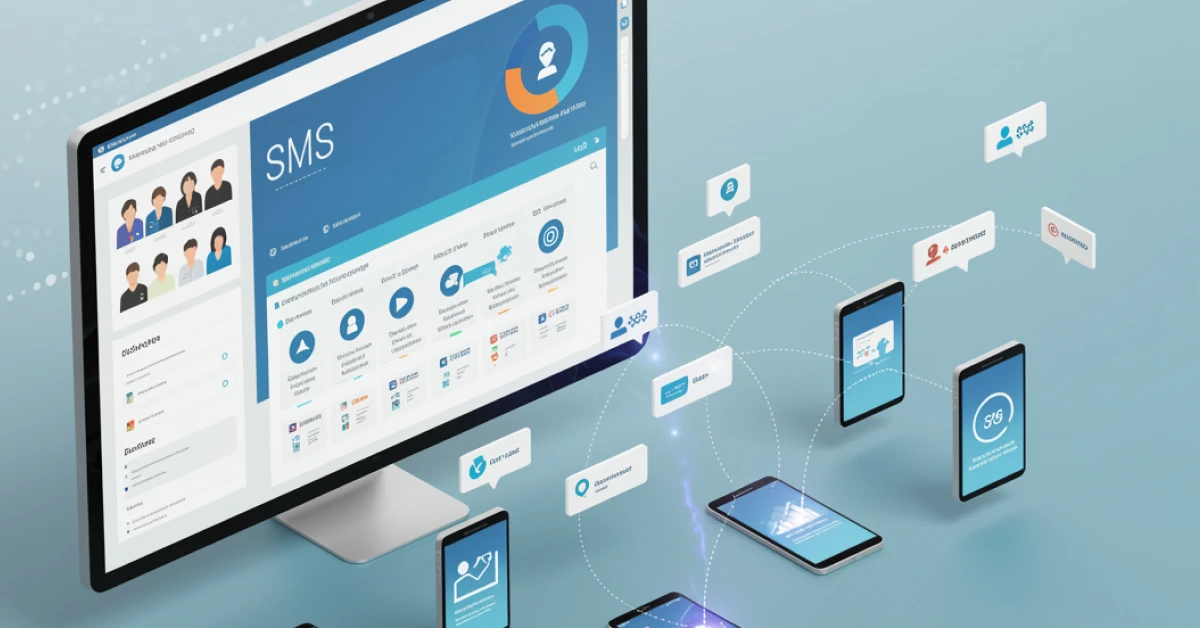
Amidst all the latest communication channels, SMS is still one of the fastest, most direct ways to reach any audience. A message simply lands straight into someone’s hand and gets read within minutes. This is the reason why businesses can’t afford to take messaging casually. Every message they send, whether it is a transactional SMS, a promotional offer, an appointment reminder, or just a service update, reflects the brand’s reputation in one way or another. And when it is about sending thousands or even millions of messages, businesses need a structured and secure way of doing it. This is where SMS campaign management comes in.
It takes a lot of careful planning in terms of who gets the message, at what time, through which route, and why, when a business communicates with its customers via SMS. From segmenting their audience, to personalizing messages as well as tracking performance and ensuring compliance – SMS campiagns take careful consideration to be successfully executed.
When done in the right way, SMS campaigns don’t just deliver messages; they drive engagement, improve conversions, reduce churn, and build stronger customer relationships. This blog will give you in-depth knowledge about what SMS campaign management means, how it works, and why it’s a must-have strategy for businesses that rely on high-volume messaging.
What is SMS Campaign Management?

As the term indicates, SMS campaign management is the process of planning, executing, monitoring, and optimizing text messages or SMS campiagns at scale. Let’s understand this through a simple example.
Suppose you are an e-commerce business and you want to:
- Send a discount code to inactive customers
- Notify premium users about early access sales
- Deliver order confirmations instantly
- Remind customers about abandoned carts
- Send OTPs securely and without delay
That’s a lot of work, and if you plan to do all of this manually using different contact lists, different message formats, and different timing, you will simply be surrounded by chaos, right?
However, with the help of SMS campaign management, all this chaos can be structured. Here’s how:
Audience Segmentation
Not every message goes to every customer. Campaign management tools let you segment your customers into different categories on the basis of behavior, geography, purchase history, engagement level, or demographics. When SMS campaigns are sent using segments, it becomes easy for the business to ensure that relevant messages are sent, which directly impacts open rates and conversions. For example, when new users receive onboarding messages, the likelihood of reading and taking action is quite high.
Personalization at Scale
Gone are the days when messages like “Dear Customer, enjoy 10% off” used to work. Modern SMS campaign platforms enable businesses to send personalized messages, even at large volumes, by automatically inserting dynamic fields like name, order ID, appointment date, or balance amount. This means businesses send personalized messages like “Hi Rahul, your exclusive 10% discount is waiting!” This small touch brings a big improvement.
Scheduling and Automation
Manual execution of campaigns during peak engagement hours is exhausting. SMS campaign management tools enable businesses to schedule promotional campaigns at the right time and even automate transactional messages to trigger instantly after a customer action, such as a payment or login attempt. This helps in eliminating the delays that are caused by manual processes and even reduces human errors. The best part? Message execution continues 24/7.
Monitor Delivery and Performance
Advanced SMS campaign management systems are equipped with powerful analytics tools that provide real-time insights, such as delivery rates, click-through rates, conversion tracking, bounce reports, etc. These insights enable businesses to continuously optimize their campaigns rather than just sending messages blindly.
Ensure Compliance and Routing Efficiency
SMS compliance is a critical aspect. SMS campaigns must adhere to strict industry guidelines like template approvals, sender IDs, opt-in management, etc. A reliable campaign management system ensures messages are compliant and routed through optimized carrier paths for better delivery rates.
Why SMS Campaigns Deliver Higher Engagement Than Other Channels
Let’s begin with a simple question. When was the last time you ignored a text message? Now compare that to the number of emails sitting unopened in your inbox… or the social media ads you scrolled past without even noticing.
That right there explains why SMS campaigns consistently outperform most other communication channels when it comes to engagement.
But let’s go deeper.
SMS is Instantaneous
A text message lands directly in the customer’s default messaging app. There’s no dependency on the internet, and there’s no need to download any app. Since a mobile phone is every individual’s personal space, when a message appears there, it feels urgent and relevant. In other words, direct access to SMS dramatically increases the likelihood of the message being opened and acted upon.
Significantly Higher Open Rates
In today’s digitally-driven world, it is often thought that digital communication channels like email and social media are very powerful. That’s true, but they come with a lot of noise. Users are already overwhelmed with endless emails in their inboxes, and social media has gone extremely competitive and demands money for milliseconds of attention.
SMS simply cuts to the chase. Statistics within the industry reveal that SMS open rates can exceed 90%, often within minutes of delivery. Compare that to average email open rates that typically range between 15–25% depending on the industry.
That speed matters especially for time-sensitive use cases like flash sales, limited-time offers, OTPs, payment reminders, and event confirmations.
No Dependence on Internet or Platform Algorithms
SMS is considered more reliable than modern digital channels like email and social media. This is because email requires internet access, functional email servers, and proper spam filtering. Social media requires active app usage, favorable algorithm ranking, and paid boosts for guaranteed visibility. However, in the case of SMS, one only needs to have network coverage on their phone to receive SMS.
SMS Campaign Management Workflow: Step-by-Step
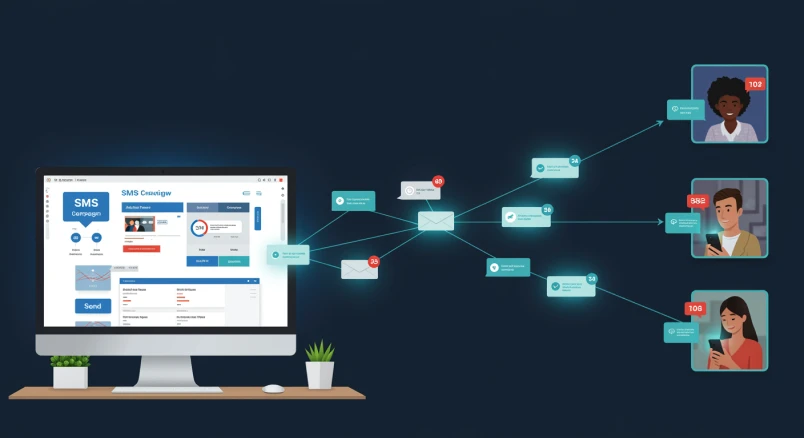
It’s very simple to send an SMS to someone. You write a message, hit send, and wait for responses. But when it comes to sending business SMS campiagns, the game is totally different. It needs a structured workflow comprising different steps, which are as follows:
Step 1: Define the Campaign Objective
The objective of your campaign is prime. Answer this simple question: What exactly are we trying to achieve with this SMS campaign? Your answer will define different critical aspects of the campaign, including the target audience, the content of the campaign, timing, and reporting. Some of the most common SMS campaign goals are promotional offers, transactional alerts, reminders, lead nurturing, etc.
Step 2: Audience Segmentation

This one is the real power move. If you still think that bulk messaging can reap any good results for your business, think again. Modern SMS campaign management is all about precision targeting so that your message sounds relevant to the audience and not spammy. After all, the more relevant the message, the higher the engagement. So get your audience segmented into different categories like new users, premium customers, etc.
Step 3: Compliance & Opt-in Validation
Many campaigns fail at this step. Businesses need to understand that they must comply with their industry-specific regulations and frameworks. Before sending SMS at scale, you should ensure the following:
- Proper opt-in consent
- DND (Do Not Disturb) compliance
- Regulatory alignment
- Approved sender IDs and templates
Ignoring compliance can lead to heavy penalties, sender ID blocking, and carrier-level blacklisting. Professional SMS platforms integrate compliance checks directly into the workflow to prevent delivery failures.
Step 4: Crafting the SMS Content
Here comes the creative part, but this one is also structured. Though SMS has an open rate of more than 90% but, it is the structure of the SMS, i.e., how compelling it is, that generates engagement. An effective SMS usually includes:
- Clear value proposition
- Strong CTA (Call to Action)
- Personalization (if possible)
- Short, crisp language
- URL (if needed, often shortened)
Some important things to keep in mind when crafting your SMS are:
- Keep it under 160 characters when possible.
- Avoid spam trigger words.
- Use personalization.
- A/B test different CTAs.
Step 5: Scheduling & Timing Optimization
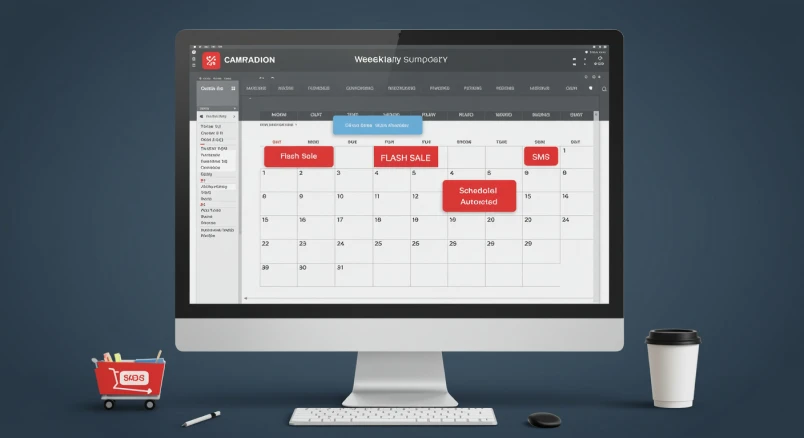
The timing of your campaign can make you win or lose. Here are some important points to consider:
- When is your audience most active?
- Are there time-zone differences?
- Are there regulatory time restrictions?
A simple example is that if you are sending a reminder SMS campaign, then schedule it 24 hours before the event.
Advanced SMS campaign management platforms enable scheduled campaigns, recurring campaigns, and trigger-based automation. This automation transforms your campaigns from a one-time blast into a continuous engagement engine.
Step 6: Routing & Delivery Management
The frontend part is over once you hit the ‘send’ button. Here are the technical things that happen behind the scenes:
- SMS request goes to the SMS gateway.
- The message is routed through carrier networks.
- The SMSC processes and forwards the message.
- The delivery report is generated.
Advanced SMS Platforms with intelligent routing ensure high delivery rates, low latency, and failover routing.
Step 7: Real-Time Monitoring & Analytics
Once the delivery is done, the evaluation part begins. Having access to SMS campaign performance insights helps you know:
- Which segment performed best?
- What time delivered the highest engagement?
- Which route had failures?
Some of the most important metrics you should track from your SMS campaign include
- Delivery rate
- Failed messages
- Click-through rate (for SMS with links)
- Conversion rate
- Response rate
- Opt-outs
Your campaign data turns SMS from guesswork into a measurable growth channel.
Step 8: Optimization & Iteration
This is what separates the best performing brands from the average ones – they treat SMS campiagns as an ongoing process and not a one-time activity. Some of the most effective SMS optimization strategies are:
- A/B testing message copies
- Testing different send times
- Refining segmentation rules
- Improving landing page alignment
- Adjusting frequency
With these strategies, you can compare different campaigns to figure out what worked and what did not. Over time, this iterative approach can help you improve ROI significantly.
Step 9: Automation & Journey Integration
Modern SMS campaign management integrates with CRM systems, marketing automation tools, eCommerce platforms, and billing systems. This enables Trigger-based messaging, lifecycle campaigns, cross-channel workflows (SMS + email + WhatsApp), and behavioral targeting.
Choosing the Right SMS Campaign Management Platform
The very first thing to understand here is that not all SMS campaign management platforms are built the same.
Some are great for simple bulk messaging. Others are built for enterprise-scale automation, compliance, and multi-channel orchestration. Choosing the right SMS campaign management platform isn’t just about pricing; it’s about capability, scalability, compliance, and control.
Let’s break down what really matters.
Delivery Infrastructure & Routing Quality
At its core, an SMS platform is only as good as its delivery network.
Ask:
- Does the platform use direct operator routes?
- Is there intelligent routing?
- Is failover routing available?
- What’s the average delivery latency?
For transactional traffic like OTPs or banking alerts, milliseconds matter. A delay can directly impact user experience and conversions.
Look for:
- High delivery success rate
- Real-time delivery reports (DLRs)
- Route transparency
- Global carrier connectivity
If you’re an aggregator, route stability and margin control become even more critical.
Compliance & Regulatory Support
Compliance is non-negotiable. Your SMS platform should provide:
- Template approval management
- Sender ID registration
- Opt-in/opt-out tracking
- Automatic DND scrubbing
- Regulatory audit logs
If compliance is manual, you’re risking delivery blocks and penalties. Always remember, a good platform automates compliance within the workflow, not as an afterthought.
Advanced Segmentation & Personalization
Modern SMS marketing is not about blasting 1 million identical messages. Therefore, the right platform should allow:
- Behavioral segmentation
- Dynamic filters
- API-based audience imports
- Real-time event triggers
- Personalization
For example:
Instead of “Dear Customer,”
You send: “Hi Rahul, your cart items are waiting.”
That small shift significantly improves engagement. If the platform cannot segment intelligently, your ROI will plateau.
Automation & Workflow Builder
In 2026, SMS campaigns will be automated, not manually scheduled every time.
Look for:
- Visual workflow builder
- Trigger-based campaigns
- Drip sequences
- Lifecycle campaigns
- CRM integrations
Here’s an example workflow:
1. User signs up → Welcome SMS
2. Doesn’t log in for 7 days → Reminder SMS
3. Makes purchase → Confirmation SMS
4. Automation reduces manual effort and increases consistency.
Real-Time Analytics & Reporting
If you can’t measure it, you can’t improve it.
Your dashboard should provide:
- Delivery rate
- Failure breakdown
- Click-through rate
- Conversion tracking
- Operator-wise performance
- Cost analysis
Advanced analytics transforms SMS from a communication tool into a revenue channel.
API & Integration Capabilities
For enterprises and aggregators, APIs are everything.
Check for:
- RESTful API support
- High TPS (Transactions Per Second)
- Webhooks
- SDK availability
- CRM/eCommerce integrations
If your SMS platform cannot integrate with your ecosystem, you’ll create data silos.
Remember, seamless integration = smoother customer journeys.
Scalability & Global Expansion
Always think long-term.
Ask your SMS platform provider:
- Can it handle traffic spikes?
- Is it cloud-native?
- Does it support international messaging?
- Are there multi-currency billing options?
A platform that works for 50,000 messages may fail at 5 million. Therefore, choose infrastructure that grows with you.
Security & Data Protection
This one is especially important for:
- Banks
- Fintech
- Healthcare
- Enterprises
Look for:
- Encrypted APIs
- Role-based access control
- Audit trails
- Data compliance certifications
Security is not just IT’s concern; it protects brand trust.
Last Words
Let’s conclude this post with a very often asked question- Which businesses will dominate customer communication? The answer is simple: Those who treat SMS as a strategic engagement channel and not just a broadcast tool will really win the game.
If you are looking for an advanced SMS platform that delivers performance with reliability, then you should see our REVE SMSC performing live through a free demo.
Frequently Asked Questions