Staff Augmentation vs Outsourcing in 2026: Pros & Cons
- December 24, 2025
- 13 Mins Read
- Listen
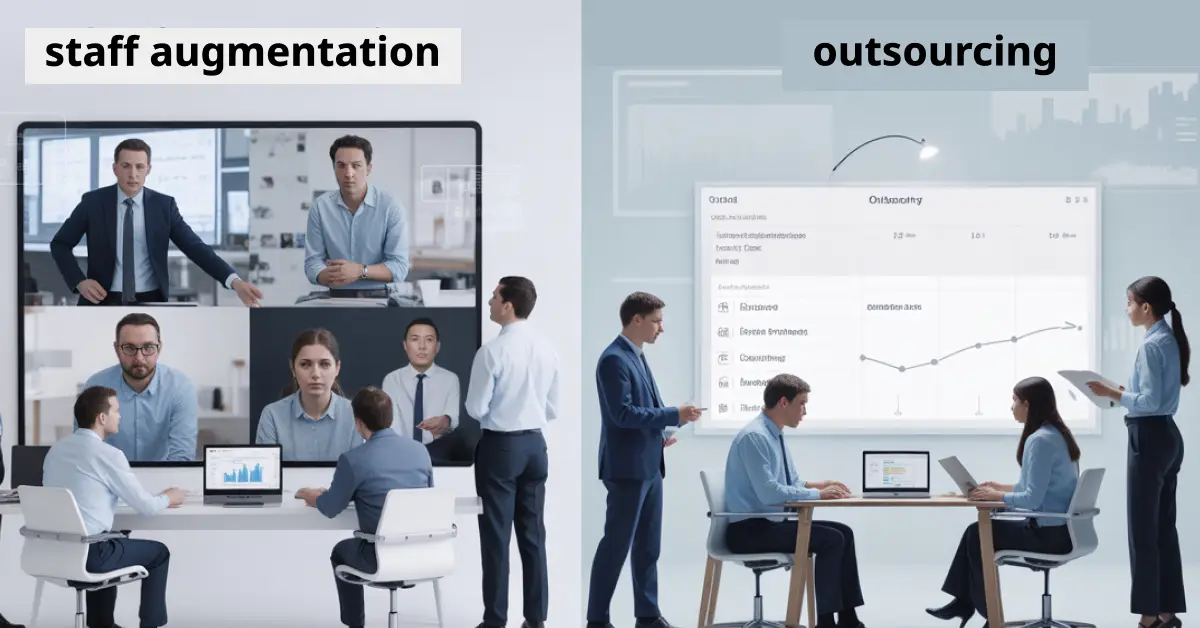
Today, businesses are rapidly accelerating towards digital transformation – building new software, modernizing legacy systems, or delivering customer-facing platforms. Amidst this shift, they face one challenge: how to get a flexible workforce that can adapt to changing demands without sacrificing control, quality, or cost efficiency. This is where the debate around two popular talent hiring strategies comes into focus: staff augmentation vs outsourcing.
With the rise of remote work, global talent pools, and AI-driven delivery models, the debate around staff augmentation vs outsourcing has become even more relevant in 2026. Enterprises, startups, and IT leaders are increasingly asking:
- Which model gives better control?
- Which is more cost-effective?
- Which works best for complex, long-term projects?
Both of these approaches enable businesses to access skilled talent beyond their in-house teams. However, the way in which these work is totally different. It is therefore important for a business to choose the right model so that it can reap the full benefits.
In this guide, you’ll learn how each model works, their advantages and disadvantages, cost implications, ideal use cases, and how to choose the right approach based on your business goals.
What is Staff Augmentation?

In the staff augmentation model, a business temporarily adds skilled professionals to its existing in-house teams to fill specific skill gaps or increase capacity. This augmented workforce works directly under the company’s management and processes. But these professionals are not hired as full-time employees; rather, they are hired by a third-party provider, which handles recruitment, payroll, compliance, and HR responsibilities.
In simple words, the augmented workforce functions like the internal team members of a business, i.e., follow your workflows, use your tools, attend your meetings, and report to your managers. According to Gartner, over 30% of IT organizations globally now use staff augmentation to fill skill gaps and accelerate delivery timelines. Source
Example of Staff Augmentation
Imagine a SaaS company plans to build a new feature in their product, but they lack experienced DevOps engineers. So instead of hiring full-time staff, the company augments its team with three DevOps engineers for 8 months.
What is Outsourcing?

In the outsourcing mode, a business delegates an entire project, process, or function to an external vendor or service provider. This means the entire responsibility for execution, management, and delivery is handed over to the service provider. Unlike staff augmentation, an outsourcing provider assembles and manages its own team, defines delivery processes, and is accountable for meeting agreed timelines, budgets, and quality standards. Moreover, in this approach, the client focuses on outcomes rather than daily task management.
In simple words, instead of directing day-to-day execution, the client defines what needs to be achieved, and the outsourcing partner owns how it’s delivered, including staffing, project management, quality control, and delivery outcomes. Deloitte’s 2025 Global Outsourcing Survey reports that 70% of enterprises outsource to improve efficiency and focus on core competencies. Source
Example of Outsourcing
A startup business outsources the development of its mobile application project to an experienced IT outsourcing service provider. The vendor handles everything- architecture, development, testing, and deployment while the startup focuses on marketing and growth.
Staff Augmentation vs Outsourcing: Key Differences
Understanding the differences between staff augmentation and outsourcing can help businesses decide which model fits them best. Let’s learn:
1. Level of Control & Management
Staff Augmentation: In this arrangement, the business retains full control over the project. The hired professionals only work as an extension of the business’s in-house team, while following their tools, workflows, plans, and reporting structure. The tasks, priorities, and daily work execution are handled by the business itself.
Outsourcing: In outsourcing, control is shared or transferred to the service provider. The business defines the scope, goals, and timelines of the project, but the vendor manages team selection, task execution, and delivery of the project. This also means that the business’s involvement is more strategic, as operational things are handled by the service provider.
2. Scope of Responsibility
Staff Augmentation: Since the augmented staff works as a part of the business’s team, the responsibility for project success remains largely with the business’s internal team. Augmented staff execute tasks, but planning, architecture, and decision-making stay in-house.
Outsourcing: Since the outsourcing partner executes the entire project, they are completely accountable for the end-to-end delivery of the project and not just the resources.
3. Flexibility & Scalability
Staff Augmentation: In this arrangement, the team size can be quickly scaled up or downdepending upon the work requirements. Businesses with fluctuating demands or with short-term skill needs can take more advantage.
Outsourcing: This is a more structured approach where scaling usually requires contract changes, renegotiation, or revised timelines. It’s better suited for long-term, stable workloads.
4. Cost Structure & Budgeting
Staff Augmentation: Typically follows a time-based pricing model (hourly or monthly). You pay for the resources you use, which offers cost transparency but requires careful management to avoid overruns.
Outsourcing: Often uses fixed-cost or milestone-based pricing, making budgeting more predictable. However, change requests can increase costs.
5. Speed of Onboarding & Execution
Staff Augmentation: Since resources integrate into your existing setup, onboarding can take days or weeks. Ideal for urgent skill gaps or tight deadlines.
Outsourcing: Requires more upfront planning in terms of requirements gathering, vendor onboarding, and process alignment, which can slow initial kickoff but improves execution consistency.
6. Collaboration & Team Integration
Staff Augmentation: Augmented staff work closely with your internal teams, attend meetings, participate in daily stand-ups, and align with your company culture.
Outsourcing: Collaboration is more formal and SLA-driven. Communication happens through scheduled updates, reports, and review meetings.
| Feature | Staff Augmentation | Outsourcing |
|
Management |
You manage the resources daily. |
The vendor manages the project and team. |
|
Control |
High. You oversee every task and detail. |
Low. You focus on the final results. |
|
Integration |
Experts join your internal team. |
The team works independently (often off-site). |
|
Responsibility |
You are responsible for the outcome. |
The vendor is responsible for the outcome. |
|
Pricing |
Usually, hourly or monthly rates per person. |
Usually fixed-price or milestone-based. |
|
Scalability |
Extremely flexible (add/remove individuals). |
Less flexible once the contract/scope is signed. |
Pros and Cons of Staff Augmentation
Let’s take a closer look at the advantages and limitations of staff augmentation so you can decide whether it aligns with your business goals.
Pros of Staff Augmentation
1. Faster Access to Specialized Talent
Staff Augmentation allows businesses to quickly onboard skilled professionals without going through lengthy recruitment cycles. It typically takes a few days or weeks to find appropriate workers, which helps in keeping projects on track.
2. High Flexibility & Scalability
One of the biggest benefits of staff augmentation is the ability to scale teams up or down on demand. It works well for short-term projects as well as when there’s a sudden spike in workload.
3. Full Control Over Projects
With staff augmentation, your internal team retains complete ownership of project management, workflows, and decision-making.
4. Cost Efficiency
Staff augmentation helps businesses avoid long-term commitments, recruitment costs, benefits, and overheads, as they pay only for the required duration. This makes it a more cost-effective approach than hiring permanent employees.
5. Seamless Team Integration
Augmented professionals work as an extension of your in-house team, participating in daily stand-ups, sprint planning, and collaboration tools. This results in better alignment, faster execution, and minimal communication gaps.
Cons of Staff Augmentation
1. Increased Management Responsibility
Staff augmentation offers the benefit of more control, but at the same time, it also means that your internal team must manage augmented staff. So if you are an organization with well-skilled managers, only then are you good to go.
2. Knowledge Dependency
Augmented staff are hired mainly for short-term projects, which means they may leave once their contract ends, potentially taking critical project knowledge with them. It is important to ensure proper documentation, handovers, and knowledge-sharing processes.
3. Cultural & Communication Gaps
Since augmented professionals are not permanent employees, there can be alignment issues with company culture, time zones, or communication styles, especially in distributed teams.
4. Limited Accountability for Outcomes
Staff Augmentation is a resource-based approach, which means it focuses on providing skills and talent and not guaranteed results. With this, the success of the project remains the responsibility of the business.
5. Not Ideal for End-to-End Projects
If you need a partner to handle everything like from planning to execution, staff augmentation may not be the best fit.
Pros and Cons of Outsourcing
Outsourcing offers strong advantages, but it also introduces certain trade-offs that decision-makers should carefully evaluate.
Pros of Outsourcing
1. Significant Cost Savings
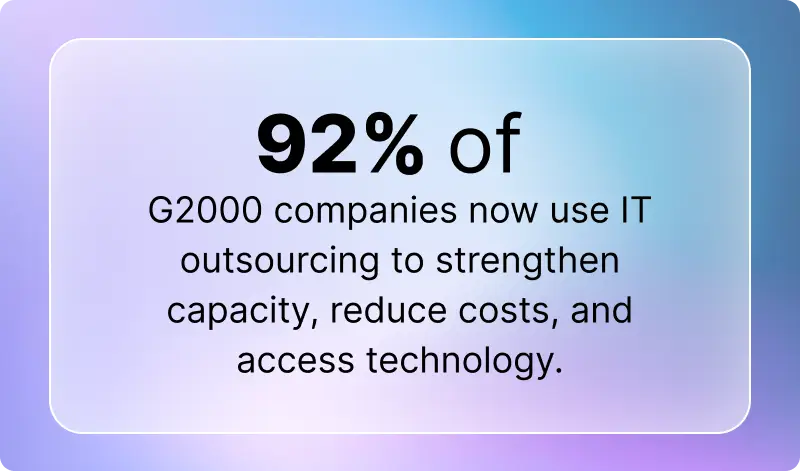
One of the biggest benefits of outsourcing is lower operational and labor costs. Businesses don’t need to spend on office space, hardware, utilities, training, and other long-term employment benefits. Moreover, they can save further by hiring lower-wage outsourcing workers in offshore or nearshore markets. This helps companies reallocate budgets toward innovation, marketing, or growth initiatives.
2. Access to Global Expertise
Outsourcing opens the door to a global talent pool with specialized skills and domain expertise, often difficult or expensive to build internally. It helps businesses achieve higher-quality output driven by experienced professionals who focus exclusively on their area of expertise.
3. End-to-End Ownership & Accountability
Outsourcing vendors take full responsibility for delivery, performance, and outcomes, typically governed by SLAs (Service Level Agreements). Internal teams can focus on strategic priorities instead of day-to-day execution.
4. Faster Time-to-Market
Well-established outsourcing partners come with established teams, mature processes, and ready infrastructure. This means they can start quickly and scale without impacting efficiency.
5. Operational Scalability
By outsourcing, businesses can easily scale their operations without causing any disruption within their internal workflows. Outsourcing vendors can rapidly increase or decrease resource usage based on demand.
6. Process Optimization & Best Practices
Having experienced outsourcing providers who follow best industry practices, proven workflows, and compliance frameworks saves businesses from investing heavily in internal redesign and reduces operational risk.
7. Reduced Compliance Burden
Outsourcing partners often handle regulatory compliance, data security, and quality standards, reducing legal and operational risk, especially in industries like telecom, BFSI, and healthcare.
Cons of Outsourcing
1. Reduced Control Over Execution
With outsourcing, businesses get limited direct control over daily operations, workflows, and resources as these are handled by the service provider.
2. Communication & Time Zone Barriers
At times, outsourcing can introduce language, cultural, and time zone challenges, which may impact collaboration and responsiveness. However, if the communication processes are well-defined, such problems would not arise.
3. Dependency on the Vendor
Long-term outsourcing can lead to vendor dependency, creating migration challenges and knowledge ownership issues.
4. Data Security & Confidentiality Risks
Sharing sensitive business or customer data with third-party vendors increases data privacy and security concerns. However, with reputable outsourcing vendors, this shall not be a problem
Cost Comparison: Staff Augmentation vs Outsourcing
Cost is often the biggest deciding factor when choosing between staff augmentation and outsourcing, but the real difference goes far beyond hourly rates. Each model has visible costs and hidden expenses that impact short-term budgets and long-term ROI.
Understanding how these cost structures work helps businesses choose the right engagement model based on control, flexibility, and financial predictability.
Cost Structure of Staff Augmentation
In staff augmentation, companies pay primarily for individual talent, while most operational and management costs remain in-house.
Primary Cost Components
- Hourly or monthly cost per augmented resource
- Recruitment or vendor fees
- Onboarding and training costs
- Payroll, benefits, and compliance (sometimes shared)
- Internal project management and supervision
Hidden & Indirect Costs
- Time spent managing augmented staff
- Infrastructure costs (tools, licenses, systems)
- Productivity ramp-up time
- Replacement costs if a resource exits
Typical Cost Range of Staff Augmentation
Staff augmentation typically costs 20-40% more per resource than outsourcing, due to the retained management and infrastructure responsibilities.
Cost Structure of Outsourcing
Outsourcing shifts both execution and operational responsibility to the service provider, resulting in a more bundled and predictable cost model.
Primary Cost Components
- Fixed monthly, per-project, or per-transaction pricing
- SLAs and performance-based pricing models
- Infrastructure, tools, and workforce included
- Quality assurance and reporting
Hidden & Indirect Costs
- Transition and knowledge transfer costs (one-time)
- Change management or customization fees
- Contract exit or migration costs (if switching vendors)
Typical Cost Savings with Outsourcing
Outsourcing can reduce operational costs by 30–60%, particularly for functions such as customer support, IT operations, finance, and telecom services.
When to Choose Staff Augmentation
Staff augmentation is the right choice when you already have strong internal systems but need extra expertise or temporary capacity.
Choose Staff Augmentation When:
- You need specialized skills quickly
- You want full control over the team
- Your project is short-term or variable
- You already have strong internal management
- Security, IP, or compliance is critical
When to Choose Outsourcing
Outsourcing is the smarter choice for businesses that want outcomes, not operational responsibility.
Choose Outsourcing when:
- You want to reduce operational costs
- The process is repeatable and well-defined
- You need fast scalability
- You want predictable costs & SLAs
- You prefer to focus on core business
Decision Flowchart – Staff Augmentation or Outsourcing?

Are you still not sure which model fits your business? Use the simple flow below to make a quick, confident decision.
Step 1: Do you want full control over daily work and team management?
Yes → Go to Staff Augmentation
No → Go to Step 2
Step 2: Is your goal to reduce operational costs and internal workload?
Yes → Go to Outsourcing
No → Go to Step 3
Step 3: Is the project short-term or skill-specific?
Yes → Staff Augmentation
No → Go to Step 4
Step 4: Is the work process repetitive and well-defined?
Yes → Outsourcing
No → Go to Step 5
Step 5: Do you need rapid scalability without hiring overhead?
Yes → Outsourcing
No → Staff Augmentation
Conclusion
With all that we have discussed so far, we can rightly say that there is no one-size-fits-all answer when it comes to staff augmentation vs outsourcing. The right choice depends on your goals, timeline, internal capabilities, and budget priorities. Regardless of the model, what’s more important is choosing the right partner because your success depends heavily on choosing a trusted, experienced partner.
With years of hands-on experience across technology, telecom, and business process outsourcing, REVE Outsourcing works closely with enterprises to help them find the right balance between operational control and efficiency. By taking a thoughtful, partnership-driven approach, we support teams in scaling at their own pace, streamlining day-to-day operations, and freeing up internal resources, so businesses can stay focused on their long-term goals and what matters most to them.
Frequently Asked Questions
Is outsourcing cheaper than staff augmentation?
Outsourcing turns out to be more cost-effective than staff augmentation when it comes to long-term or repetitive projects.
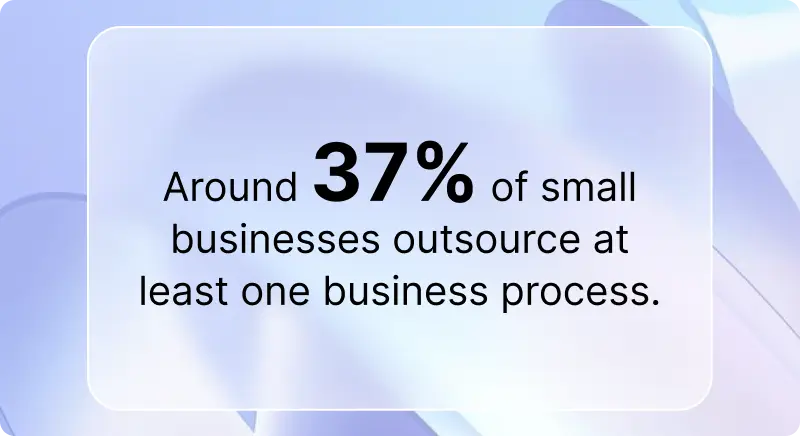
Can small businesses use outsourcing effectively?
Yes, outsourcing helps small businesses, such as startups, to access expertise without making heavy investments in large in-house teams.
Is data security a concern in outsourcing?
It can be, but if you choose a reputable service provider, then the risk gets reduced significantly.
Is outsourcing only for IT services?
No, outsourcing is widely used for customer support, finance, HR, QA, and operations.
How should businesses choose between the two models?
By evaluating project complexity, budget, control needs, scalability, and long-term goals.